The Tension No One Names
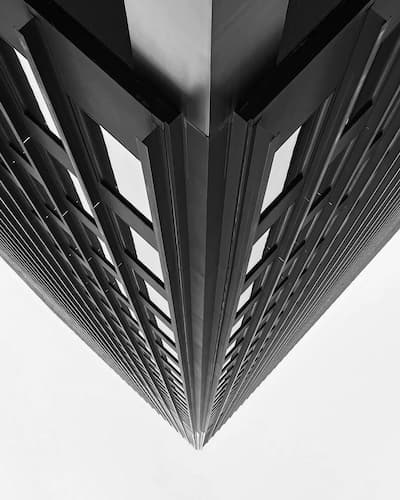
This one is a photo I took of Mies van der Rohe’s work in Toronto.
It’s another example of a place I visit and revisit because the architectural photography potential is endless.
While mobile photography for me has been casual, it’s opening up something deeper. An interest in why I choose and see the way I do. Not just what I see. It’s making me pay attention to how I think.
I come from a social science research background in grounded theory. An approach where you don’t start with a hypothesis but immerse yourself in observation and let meaning emerge.
In research these orientations are deeply engrained. Whether you lean deductive or inductive shapes how you think. Most people have encountered these ideas but few use them as a lens for understanding how they actually think.
Inductive thinking is exploratory. You observe openly, follow what’s there, and let meaning emerge rather than impose structure. Bottom up.
Deductive thinking starts with a principle or framework and applies it downward to specifics. Top down.
Between these sits abductive thinking. The ability to derive the best explanation from incomplete information. Less a mode of its own and more the bridge between the two.
We use all three daily without noticing.
But inductive and deductive are where our dominant leaning sits. The one where thinking feels most like our own.
What I’m realizing is that my research training isn’t just how I was trained to think. It’s how I naturally think. And after all these years it’s the first time it’s coming to my awareness.
This leaning isn’t just preference. It’s closer to a need. Like any other need, physical or otherwise.
When it goes unfulfilled there’s a tension. A restlessness. A sense that something essential is missing even when you can’t name what.
The way we are taught in school and trained professionally leans heavily toward deductive thinking. Structured. Rule-based. Framework-first.
Those who lean that way may never feel this tension because the world continuously meets their cognitive need without them having to seek it out.
For those of us who lean inductive, fulfillment requires more deliberate seeking.
Photography has been that for me. A place to let structure reveal itself rather than impose it.
I’m sharing this because cognitive mode awareness gets too little attention.
Knowing how you think and recognizing when that need isn’t being met might be one of the more important things to understand about yourself.
This may speak more to those who lean inductive. In a world oriented toward deductive thinking the tension can be constant and hard to name.
But regardless of where you lean, conscious awareness of your cognitive need is the basis for fulfilling it. And fulfilling it is what brings us back to centre.